










Budget 2026: Big Boost to Hyderabad’s Growth with High-Speed Rail, Metro Phase 2, RRR
1 Feb, 2026 16:39 IST|Sakshi Post


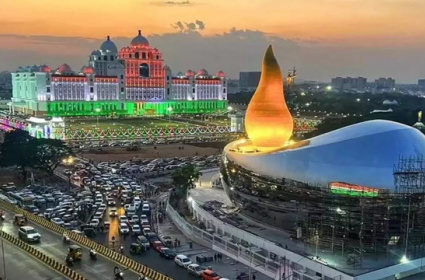
Hyderabad is poised to become a major centre in India’s next phase of railway development, following key announcements made in the Union Budget 2026–27. The Centre has unveiled an ambitious plan to introduce multiple high-speed rail routes across the country, with Hyderabad positioned as one of the core nodes in the proposed network.
Seven High-Speed Rail Routes Planned Nationwide
While presenting the Union Budget in Parliament on Sunday, February 1, Union Finance Minister Nirmala Sitharaman announced that the government intends to develop seven high-speed rail corridors connecting prominent cities. The initiative is aimed at creating a faster and environmentally friendly passenger transport system that can act as a catalyst for economic growth.
The finance minister noted that these corridors would serve as growth connectors between major urban centres, improving mobility while reducing travel time significantly.
Direct High-Speed Rail Links for Hyderabad
As per the proposal, Hyderabad will be directly connected to Pune, Bengaluru, and Chennai through high-speed rail lines. These connections are expected to enhance business travel, tourism, and regional development.
Other corridors announced under the plan include Mumbai–Pune, Chennai–Bengaluru, Delhi–Varanasi, and Varanasi–Siliguri, creating a wide national network. Currently, India’s first high-speed rail project between Ahmedabad and Mumbai is already under construction, setting the foundation for future corridors.
Focus on Green Cargo Movement
In addition to passenger rail, the Budget places strong emphasis on sustainable freight transport. A new east–west dedicated freight corridor has been proposed, stretching from Dankuni in West Bengal to Surat in Gujarat.
This corridor will work alongside the existing Eastern and Western Dedicated Freight Corridors, which are already operational across several states. The new route is expected to improve cargo movement efficiency while reducing environmental impact.
Push for Education and Social Infrastructure
The Union Budget also highlighted significant investments in education-linked infrastructure. The Centre plans to establish five university townships near major industrial and logistics hubs, aiming to strengthen the connection between higher education, industry needs, and employment opportunities.
Another key announcement includes the construction of girls’ hostels in every district, covering more than 700 districts nationwide. This move is intended to improve access to education for female students.
Furthermore, the government will support the Indian Institute of Creative Technologies in Mumbai to set up content creation laboratories in 15,000 secondary schools across India, with a focus on nurturing digital and creative skills among students.
A Long-Term Vision
Overall, the Budget 2026–27 reflects a long-term vision that integrates transport, sustainability, education, and skill development. With Hyderabad emerging as a central point in the high-speed rail map, the city is set to play a crucial role in shaping India’s future connectivity and economic landscape
Also read: Budget 2026: Sector-Wise Allocation and Announcements By FM Nirmala Sitharaman
