





Bengaluru Stampede Is a Wake-Up Call to Overhaul Crowd Management in India
5 Jun, 2025 13:05 IST|Sakshi Post


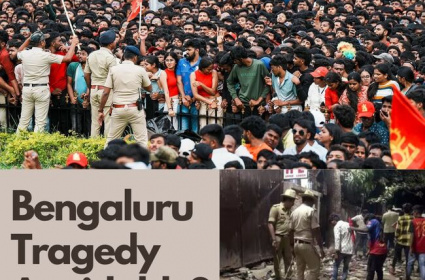
Communication, meticulous planning, and effective enforcement of safety measures are the three pillars of successful large-scale gatherings.
The recent stampede in Bengaluru, which claimed at least 11 lives, tragically lacked all of these crucial elements. The incident occurred during the victory parade celebrating the Royal Challengers Bangalore’s IPL 2025 championship.
Hours before the event, Bengaluru traffic police announced the cancellation of the parade citing security concerns. Yet, just a few hours later, an official post from RCB’s verified X account declared that the parade would proceed at 5 pm. The traffic police stated that they had received no formal confirmation but were “prepared if it happens.”
This glaring communication gap reflects a dangerously passive approach to public safety. Over 300,000 people converged on the Chinnaswamy Stadium, a venue designed to hold only 35,000. This staggering overcrowding is a stark demonstration of the consequences of unclear communication.
A common factor in most stampedes across India is the excessive crowding of people in confined spaces with inadequate exits. In such situations, safety protocols become paramount—these include the deployment of sufficient police personnel, comprehensive medical readiness, and effective traffic management.
It is often said that misinformation spreads rapidly; in the context of large gatherings, it spreads even faster. Reports suggest the stampede was triggered by rumours that free tickets were being distributed at gate number 7. Once the crowd goes out of control, restoring order becomes an almost herculean task.
Politicizing Tragedy
The Bengaluru stampede was entirely preventable. What compounds this tragedy is the political exploitation that followed. Drawing insensitive comparisons to deaths during the Kumbh Mela and demanding the resignation of Karnataka’s Chief Minister Siddaramaiah and Deputy Chief Minister DK Shivakumar is not only disrespectful to the families who lost their loved ones but also detracts from the urgent need for accountability.
India is increasingly becoming associated with deadly stampedes at large-scale events. In just the past 11 months, over 150 people have died in such incidents.
- In July 2024, at least 120 people lost their lives during a religious gathering stampede in Hathras, Uttar Pradesh.
- In January 2025, nearly 30 people died during the Kumbh Mela on Mauni Amavasya, one of the festival’s most auspicious bathing days, when millions gathered at the Sangam ghat.
- In Tirupati, at least eight people were killed ahead of the Vaikunta Ekadasi celebrations at the renowned Srivari temple in January 2025.
The frequency of such incidents underscores an urgent need to overhaul India’s crowd management strategies. With a population exceeding 1.4 billion, India’s strength lies in its people. Weddings often host over a thousand guests, and even smaller events attract thousands. This reality makes effective crowd management essential to safeguarding lives at any gathering.
