





Kadamba: A New Hyderabad Address Above Durgam Cheruvu, Inspired by the Indian Chaupal
31 Jan, 2026 16:15 IST|Sandeep Athreya


Kadamba Opens in Hyderabad, Bringing the Spirit of the Indian Chaupal
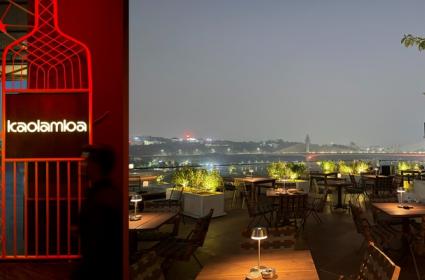
Overlooking the shimmering waters of Durgam Cheruvu and the city’s cable bridge, Kadamba has opened its doors in Madhapur as a rooftop bar and cultural compound with a distinctly local soul. Conceived as a neighbourhood bar at heart, Kadamba reimagines the Indian chaupal—a shared, unhurried gathering space—for a modern city that is increasingly craving connection over spectacle.
Designed for after-office hours and long evenings, Kadamba positions itself as a “third space” for Hyderabad: part local bar, part rooftop hangout, part cultural venue, and part quiet corner to sit with a drink. The emphasis is on comfort, familiarity and repeat visits—an alternative to high-decibel nightlife and performance-led experiences.
“Kadamba is a neighbourhood bar at heart. It’s about analogue life, where experience comes first and evenings unfold without pressure,” says founder Vikaas Passary. “We wanted to create a place people can return to again and again—open, comforting and easy.”
A Team Built Across Disciplines
The founding team brings together hospitality, finance and operations expertise. Vikaas Passary—whose previous ventures include MOB (India’s only Belgian beer house), Little Italy and So the Sky Kitchen—leads concept, brand direction and guest experience. Ashwini Maisekar, a Chartered Accountant, oversees business and financial strategy. Kshitij Bhuraria, an alumnus of IHM Mumbai and George Brown College, Toronto, heads operations, drawing on experience across Indian and international hospitality brands. Dhruv Agarwal, with a background in investment banking and private equity, supports strategy and growth.
A Name (and Space) Rooted in Place
The name “Kadamba” emerged organically. Traditionally, a chaupal forms around a tree—and at Kadamba, three Kadamba trees anchor the space. As the team gathered beneath them while naming the venue, the identity revealed itself. Punchy, rooted and unexpected, Kadamba felt inevitable—a name meant to grow with the place.
Food Without Boundaries: Chakna, Reimagined
Kadamba’s kitchen is built around chakna as it exists across India—food from street corners, permit rooms, bars and homes, shaped by flavour memories rather than rigid regional labels. Drawing from Bombay, Delhi, Kolkata, Bangalore, Jaipur, Tamil Nadu, Assam, Nagaland, Bihar and Jharkhand, the menu sits comfortably between street food and fine dining.
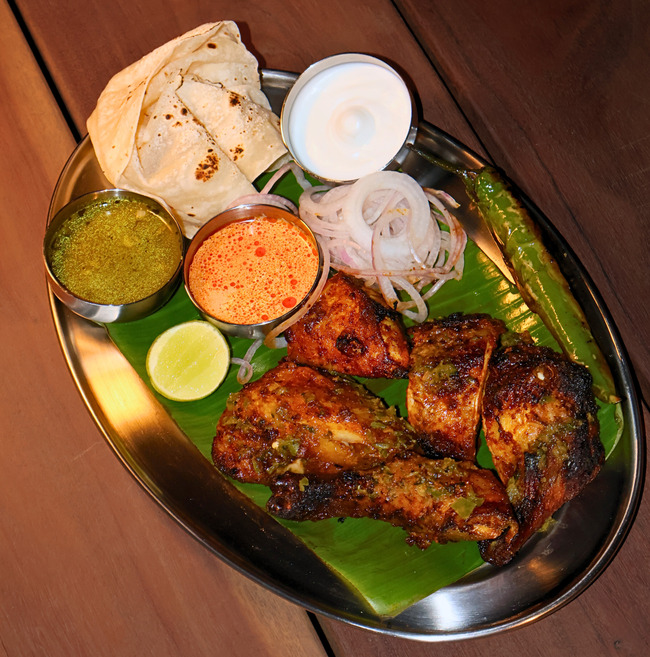
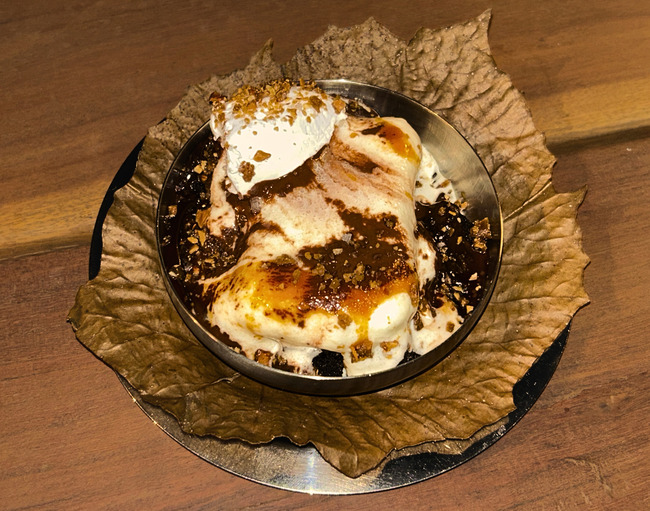
Signature dishes include Mushroom Gola, Kallu Shaap Prawns, Kulia Burrata, Maska Chole, Ghee Tari Machchi, Chicken Bharta, Taka Tak Boti, Tawa Shawarma and Butternut Squash Korma, with desserts like Chenna Jalebi and Death by Chocolate. Food is served on steel plates, paired with shared breads, and meant to be wiped, shared and eaten by hand—grounding the experience in everyday Indian bar culture. Most ingredients are sourced in and around Hyderabad, with select regional elements like Naga chilli travelling in with purpose. Seasonality guides the menu’s evolution.
From the Kitchen: Stories Behind the Plates
Mushroom Gola draws from memories of kola urundai eaten during backpacking trips through Tamil Nadu and Karnataka—slow-braised, shaped and fried, finished with coriander-chilli chutney, white garlic, local parmesan and a hint of truffle oil.
Taka Tak Boti is inspired by the sound and energy of the street-side tawa—marinated lamb, lightly cooked in the tandoor and finished on the griddle with onions and chillies. Messy, comforting and best eaten with your hands.
Murgi ko Dry Masala nods to the universal pull of tandoori chicken—brined, marinated, cooked in the tandoor and finished with a light, dry masala that pairs effortlessly with a drink.
Moong Chilli Dry reworks the comfort of moong dal pakoda into a flourless, high-heat chilli fry—bold, hot and designed for sharing.
The Drinks: Technique-Led, Easy-Going, Built for Regulars
At its core, Kadamba is a bar for repeat evenings. The beverage programme—curated by Sujan Shetty, Beverage Manager at Slow Tide and founder of Warehaus, along with —leans on fresh ingredients, house infusions and ferments, with no preservatives or syrups. Nostalgic Indian fruits and everyday flavours—guava, mango, pineapple, sitaphal and amchur—shape the menu.
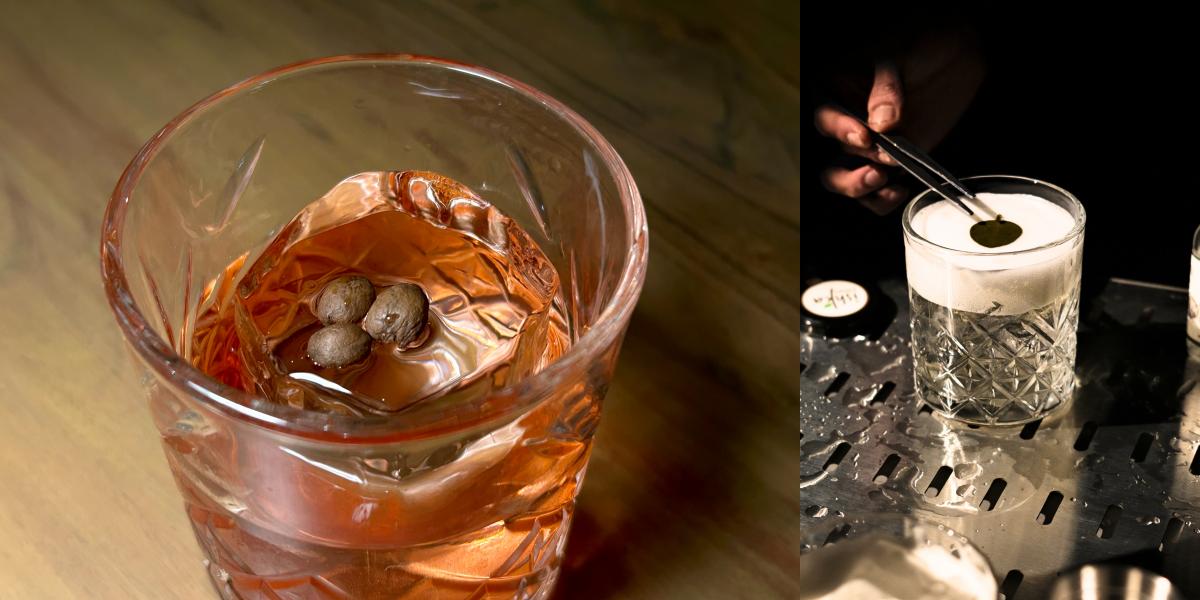
Signature drinks include T-Loop, Aam-Rudh, Agasi Negroni and Har Bar, alongside thoughtful low-ABV and non-alcoholic options. Pricing is kept honest and accessible, reinforcing the idea that a neighbourhood bar should invite frequent visits. Tucked beneath the mezzanine, the bar’s low counter encourages conversation and unhurried pours.
“Our cocktails are technique-led but familiar,” says Shetty. “Nothing is meant to feel intimidating. It’s about balance, honesty and making drinks you want to come back to.”
In the Glass
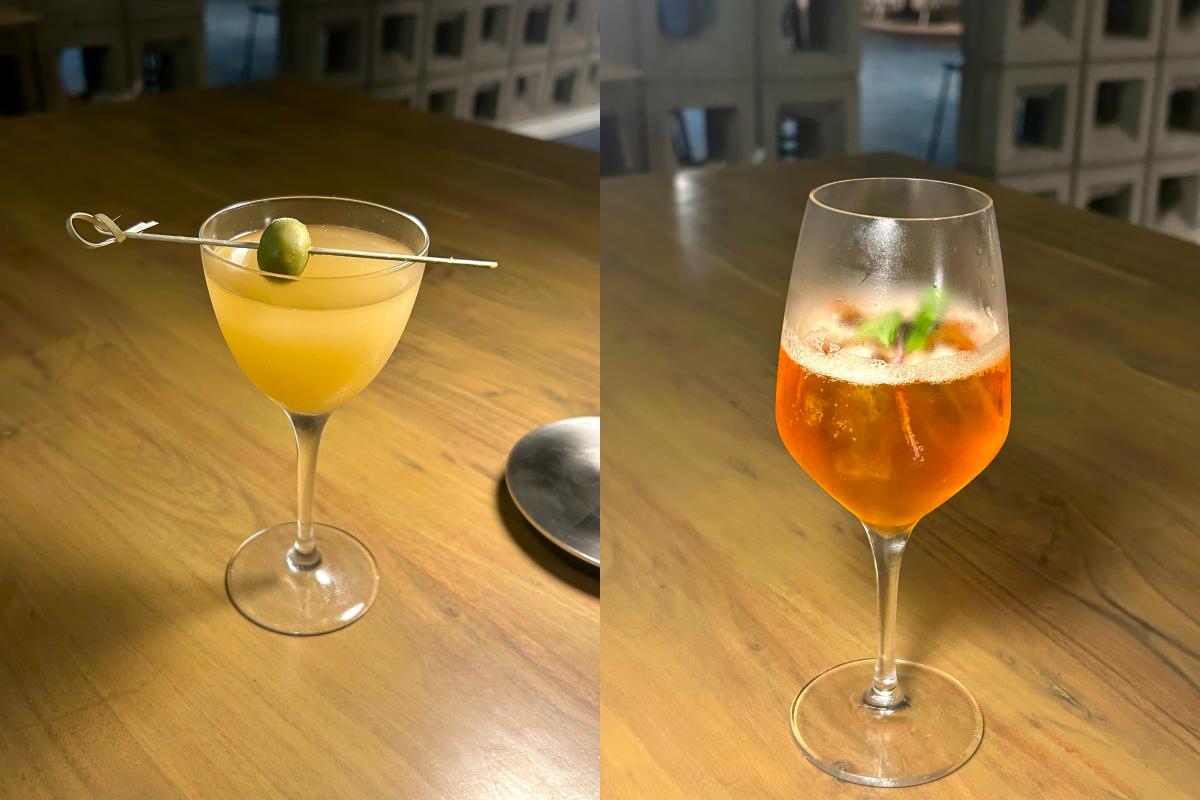
Aam-Chur riffs on childhood memories of aamchur—paired boldly with tequila and olives for a tart, saline take on a margarita.
Aam-Rudh channels salted pink guava from street carts, finished with a gentle heat.
Aam Spritzer reimagines the aperol spritz with mango prosecco—soft, warm and ideal for Hyderabad’s balmy evenings.
Design That Stays Out of the Way
Designed by Shankar Narayan Architects, Kadamba’s interiors are guided by a simple principle: nothing should come between guests and the sky or the lake beyond. The space borrows from local bars and traditional chaupals, using cement jalli, coloured cement tiles, smooth plaster, wood and nevar chairs, softened by mirrors and bold colour accents.
Standout elements include a bottle-shaped entrance with a hidden door, an inverted truss spanning 40 feet without mid-support, a private mezzanine overlooking the lake, and a shared chaupal formed by the Kadamba trees. As plants take over and surfaces soften, the venue is designed to feel timeless rather than overtly designed.
Music, Culture and Community
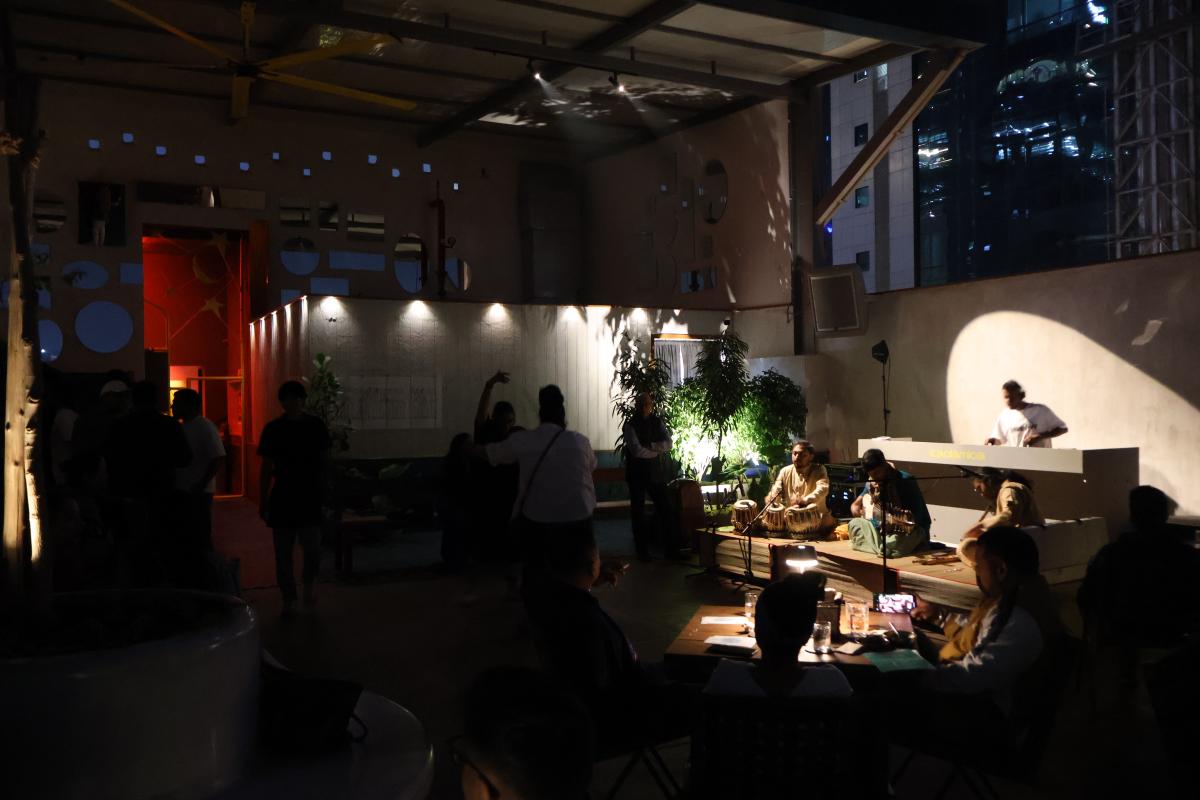
Music and cultural programming are curated to complement—not overpower—the bar. Moving away from loud EDM formats, Kadamba hosts folk, R&B, funk, jazz, indie, hip-hop, indie-electronica and house. Major performances are aligned with full-moon and no-moon nights, alongside Sunday sundowners, weekend sets and mid-week themes.
Beyond music, programming extends to typewalks, offsite experiences at local bars and kallu compounds, film screenings under the stars, workshops, talks and community-led exchanges—deepening Kadamba’s relationship with the city it calls home.
With its roots in the Indian chaupal and its gaze firmly on Hyderabad’s evolving social life, Kadamba arrives not as a fleeting hotspot, but as a place meant to be returned to—again and again.
Also Read: Orlo:The Hyderabad's Restaurant Where Every Meal Says “Aur Lo”
