






Parasakthi Review: Slow Narration Derails Sivakarthikeyan–Sreeleela Starrer
11 Jan, 2026 12:52 IST|Sandeep Athreya


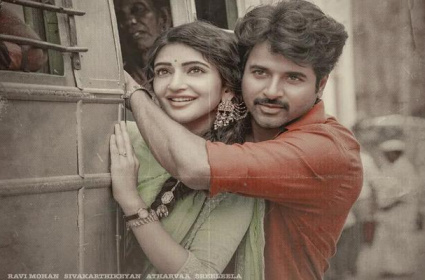
Parasakthi: A Powerful Idea Weighed Down by Uneven Storytelling
After the critically acclaimed Soorarai Pottru, filmmaker Sudha Kongara returns with Parasakthi, a period political drama rooted in the anti-Hindi imposition protests that shook Tamil Nadu in the 1960s. Headlined by Sivakarthikeyan, the film arrives with high expectations—both because of its subject and the director-actor collaboration. Unfortunately, while the intent is sincere and the canvas ambitious, the execution rarely rises to the occasion.
The Story in Brief
Set against the backdrop of student-led resistance to Hindi imposition, Parasakthi traces how the movement impacts two brothers—Chezhiyan, a fiery student leader, and Chinnadurai, his quieter sibling. Chezhiyan’s journey from rebellion to withdrawal, and his eventual return to the cause, forms the emotional spine of the narrative. Standing in opposition is Thirunaadan, a sharp and relentless intelligence officer determined to crush the movement at any cost.
The film aims to explore identity, language, and resistance—but often struggles to convert its political anger into compelling drama.
Performances: Earnest but Underutilised
Sivakarthikeyan delivers a restrained and sincere performance as Chezhiyan, particularly shining in isolated emotional moments. However, the character arc lacks the depth needed to fully showcase his transformation.
Ravi Mohan (Jayam Ravi) steps into antagonist territory for the first time as Thirunaadan. He brings control and menace to the role, though the writing limits his impact.
Atharvaa as Chinnadurai is serviceable, while Sreeleela, in her Tamil debut, looks the part but struggles in emotionally demanding scenes. Veteran Kulappulli Leela leaves a strong impression as the grandmother.
Among the supporting cast, Sandhya Mridul portrays Indira Gandhi with convincing physical resemblance, though the performance itself remains surface-level. Cameos by Rana Daggubati, Basil Joseph, and Daali Dhananjaya add some energy late in the film.
Technical Merits and Misses
G. V. Prakash Kumar’s background score occasionally elevates key moments, but the songs feel intrusive and poorly placed—especially the romantic track that disrupts the narrative flow.
Cinematographer Ravi K. Chandran is in fine form, lending the film an authentic period texture. Production design complements this, convincingly recreating the 1960s milieu.
The biggest technical drawback is the editing. The first half drags considerably, and the film would have benefited from a tighter cut. Several scenes linger without adding emotional or narrative value, testing audience patience.
What Works
Authentic period visuals
A handful of impactful pre-climax moments
Ravi Mohan’s antagonist performance
What Doesn’t
Sluggish pacing throughout
Weak emotional engagement
Inconsistent writing
Unnecessary romantic subplot
Songs that stall the narrative
Underwhelming VFX in the climax
Overall Assessment
Parasakthi tackles a sensitive and relevant subject with admirable intent, but intent alone isn’t enough. The film repeatedly hints at emotional and political depth without fully committing to either. Several scenes—particularly those involving linguistic injustice and personal loss—are conceptually powerful, yet fail to leave a lasting impact due to muted writing and flat execution.
For a director known for emotionally resonant storytelling, this outing feels strangely restrained, as if caught between creative conviction and caution. The result is a film that sparks thought but rarely stirs feeling.
Final Verdict: A Missed Opportunity with a Strong Core Idea
Rating: 2/5
