










COVID-19 Vaccine: Six Indian Companies Working Hard
17 Apr, 2020 18:58 IST|Sakshi


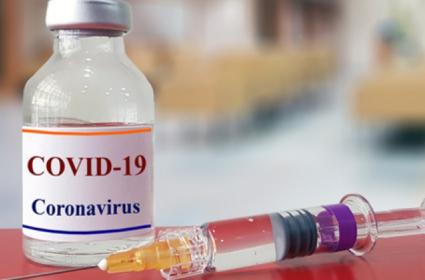
NEW DELHI: The deadly COVID-19 infection is spreading across the globe and scientists are working hard to find a quick vaccine for coronavirus. A top researcher said that, six Indian companies are working to find a vaccine for COVID-19. Reports say that nearly 70 ‘vaccine candidates’ are being tested and at least three have moved to the human clinical trial stage, but a vaccine for the novel coronavirus will not be possible for mass use before 2021.
The number of positive cases reported so far is more than 1.9 million in the world and 1,26,000 people have been died due to coronavirus. Experts say that vaccine for the novel coronavirus may not take 10 years like other vaccines do but at least a year's time is needed to prove the vaccine safe and effective.
Vaccine testing typically begins with animal and lab testing before going on to different stages of human testing. The human testing phase is composed of numerous phases. Vaccine development is a lengthy process with many challenges.
“While Zydus Cadila is working on two vaccines, Serum Institute, Biological E, Bharat Biotech, Indian Immunologicals, and Mynvax are developing one vaccine each," Gagandeep Kang, executive director of the Translational Health Science and Technology Institute, Faridabad, told PTI.
Kang is also vice-chair of the Coalition for Epidemic Preparedness Innovations (CEPI), which noted in a recent study that the “global vaccine R&D effort in response to the COVID-19 pandemic is unprecedented in terms of scale and speed".
Though Kang named six companies, the WHO has listed only Zydus Cadila and Serum Institute from India as among the global firms working on a COVID-19 vaccine.
According to the World Health Organization (WHO), three vaccine candidates are in the clinical testing phase, meaning they are able to be tested on humans, while nearly 70 are in the preclinical phase, either in lab testing, or animal studies.
Phase one trials are small scale usually involves a few participants and in this stage, scientists asses whether the vaccine is safe for humans or not and in phase two, the efficacy of vaccines against the disease and various other subjects will be studied. The final phase involves thousands of people to further assess the efficacy of the vaccine over a defined period of time, and can last several months.
Experts believe the genome sequencing of the new coronavirus provided by scientists in China shows it shares 79 percent of the same genetic material as severe acute respiratory syndrome (SARS) and 50 percent of the same material as the Middle East respiratory syndrome (MERS), a species of coronavirus which infects humans, bats, and camels.
Australia’s national science agency CSIRO announced earlier this month that it has begun preclinical tests of a vaccine developed by Oxford University in the UK.
A striking feature of the vaccine development landscape for COVID-19 is the range of technology platforms being evaluated, including nucleic acid (DNA and RNA), virus-like particle, live weakened virus, and inactivated virus approaches.
The CEPI noted that many of these platforms are not currently the basis for licensed vaccines, but experience in fields such as oncology is encouraging developers to exploit the opportunities that next-generation approaches offer for increased speed of development and manufacture. (Inputs from PTI)
Also Read: 17 Bodies Linked To Coronavirus Death Found At New Jersey Care Home
